poczta@prometalform.eu
+48 95 762 08 61
+48 95 762 08 61
Modern technologies of metal working
Laser beam cutting
Laser cutting of tubes and sections
Robotic welding
Sheet metal bending
+48 95 762 08 61
Laser beam cutting
Laser cutting of tubes and sections
Robotic welding
Sheet metal bending
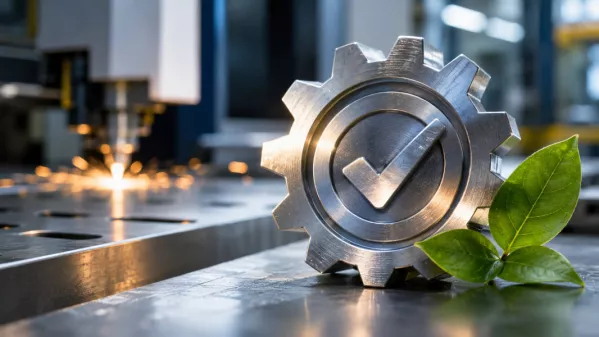
In the modern metalworking industry, technology alone is not enough to meet growing market demands. Efficient production management, consistent quality control, timely order fulfilment and a responsible approach to the natural environment are equally important. These factors determine whether a company can provide its customers not only with precisely manufactured components but also with stability and predictability throughout their business relationship.
At Pro Metal Form, we fully understand the importance of these values. That is why our operations are founded on international management standards confirmed by ISO 9001:2015 and ISO 14001:2015 certifications. The former concerns quality management systems, while the latter defines environmental management requirements. Together, they form the foundation of a responsible and modern approach to industrial metalworking.
But what do these certifications mean in practice? How do they influence the manufacturing process, and what benefits do they bring to our customers? Let us take a closer look at the solutions that make quality, precision and environmental responsibility an integral part of our everyday operations.
The International Organization for Standardization (ISO) develops standards that help companies structure their management processes, improve operational efficiency and meet specific requirements. ISO standards are applied across almost every sector of the economy, but they are particularly important in manufacturing, where even minor deviations from established parameters can affect the quality of the finished product.
In the metalworking industry, a well-organised management system is of considerable importance. Production often involves numerous interconnected technological operations, such as laser cutting, sheet metal bending, tube and profile processing, and welding. Each requires proper preparation, parameter monitoring and compliance with technical documentation.
ISO certification confirms that a company has implemented a management system that complies with the requirements of a specific standard and that its operation has been assessed by an independent certification body. However, this does not mean that all products are automatically free from defects. The purpose of a certified management system is to establish conditions that enable effective process control, identification of nonconformities and systematic elimination of their root causes.
At Pro Metal Form, we regard certifications as part of our long-term development strategy. They are not merely a formality required by business partners, but a tool that supports production management, employee skills development and the continuous improvement of our services.
The ISO 9001:2015 standard defines the requirements for a quality management system. Its fundamental principle is to organise a company's operations in such a way that the products and services it delivers consistently meet customer requirements and applicable statutory and regulatory requirements.
This is particularly important at Pro Metal Form, as we undertake projects requiring high manufacturing accuracy, appropriate surface quality, compliance with dimensional tolerances and repeatability of technological parameters. This applies to both individual components and series production, where every subsequent part must conform to the approved specification.
One of the most important principles of ISO 9001 is the process approach. This means that the quality of the finished product depends not only on the final manufacturing operation but also on the correct execution of all preceding stages.
At Pro Metal Form, the order fulfilment process begins with an analysis of customer requirements and technical documentation. At this stage, it is essential to determine the type of material, required dimensions, tolerances, batch size and any additional quality control requirements. Only on this basis can the manufacturing process be properly planned and suitable technologies selected.
This approach helps reduce the risk of misunderstandings, misinterpretations and costly changes at later stages of production. Proper production preparation is one of the most important prerequisites for achieving high-quality finished components.
In a modern manufacturing facility, quality control should not be limited to inspecting the finished product. Monitoring compliance with requirements throughout successive stages of order fulfilment is a much more effective approach.
At Pro Metal Form, we employ a multi-stage quality control approach that includes:
This approach enables potential problems to be detected at an early stage, before they affect subsequent manufacturing operations. It is particularly important when fulfilling complex orders in which a single component passes through several different workstations and technological processes.
One of the greatest challenges in industrial metalworking is ensuring production repeatability. Customers ordering several hundred or several thousand identical components expect every one of them to meet the same technical requirements.
At Pro Metal Form, we use advanced manufacturing equipment, including TRUMPF and ADIGE laser cutting systems, Panasonic TAWERS welding robots, and DENER and SERVOBRAKE press brakes. Advanced CNC control systems enable precise definition of machine operating parameters, while appropriate inspection procedures help maintain process stability.
At the same time, regular equipment maintenance, monitoring of measuring equipment and control of technological parameters help reduce the risk of unplanned downtime and quality deviations.
Repeatability is not a matter of chance. It is the result of combining appropriate technology, employee experience and an effective quality management system.
In industrial manufacturing, even a seemingly minor change to technical documentation can significantly affect the final result. A modified hole dimension, a different bending radius or a change in material grade must be properly accounted for in the manufacturing process.
That is why the effective management of documented information is an important element of the ISO 9001 system. At Pro Metal Form, we ensure an organised flow of documentation, monitor its validity and maintain the ability to retrieve relevant information concerning completed and ongoing orders.
Proper documentation management facilitates communication between company departments, reduces the risk of using outdated technical drawings and enables more efficient fulfilment of recurring orders. It is also particularly valuable in long-term cooperation with customers who expect established production parameters to remain consistent over subsequent months or years.
Modern industrial manufacturing must take into account not only technical and economic requirements but also the environmental impact of its operations. This is particularly relevant to the metalworking industry, where considerable quantities of energy, raw materials and consumables are used.
The ISO 14001:2015 standard defines the requirements for an environmental management system. Its purpose is to support companies in identifying the environmental aspects of their operations, controlling associated risks and systematically improving their environmental performance.
At Pro Metal Form, environmental responsibility is an important element of production management. We strive to use resources efficiently, reduce waste generation and implement technological solutions that enable more effective management of energy and materials.
One of the most important challenges in metalworking is the optimal use of raw materials. Steel sheets, aluminium and stainless steel have a specific value, which means that any unnecessary waste represents both an additional cost and a greater environmental burden.
In laser cutting processes, the proper arrangement of components on a metal sheet is particularly important. Advanced cutting layout software, commonly referred to as nesting software, makes it possible to maximise the use of available material and reduce the amount of production scrap.
Proper planning also helps reduce unnecessary operations, minimise material losses and make more efficient use of machine operating time. The benefits are therefore twofold – both environmental and economic.
Proper segregation of metal waste is equally important. Steel, aluminium and other metals can be reused as secondary raw materials, reducing the demand for newly sourced materials.
Metalworking is an energy-intensive activity. Industrial lasers, welding equipment, ventilation systems and press brakes all require electricity to operate correctly. Reducing unnecessary energy consumption is therefore an important area of process improvement.
At Pro Metal Form, we invest in modern technological solutions that combine high productivity with efficient resource management. A good example is our SERVOBRAKE 4015 servo-electric press brake, which uses an electric drive instead of a conventional hydraulic system.
Servo-electric technology can reduce energy consumption, particularly during intervals between operating cycles. An additional benefit is the elimination of hydraulic oil from the machine's main drive system.
However, energy efficiency depends not only on the type of equipment used. Proper production planning, minimising idle machine operation, regular maintenance and monitoring energy consumption are equally important.
Metal cutting, bending and welding generate various types of waste that require appropriate handling. In addition to metal scrap, these may include used consumables, packaging, filters, oils and substances used during equipment maintenance.
An environmental management system helps establish clear procedures for segregating, storing and transferring such waste to authorised waste management operators. Particular attention must be paid to substances that may pose an environmental hazard and must therefore be stored and managed in accordance with applicable regulations.
At Pro Metal Form, we strive to reduce waste generation as early as the production planning stage. This approach is more effective than focusing solely on the subsequent management of waste.
Welding and laser cutting processes can generate dust, fumes and other pollutants. Appropriate ventilation, local extraction systems and filtration equipment are therefore essential for both environmental protection and employee safety.
At Pro Metal Form, we use solutions designed to capture and reduce pollutant emissions generated during manufacturing processes. Monitoring the technical condition of these installations and ensuring the proper organisation of workstations are also important elements of our approach.
These measures demonstrate that environmental responsibility and manufacturing safety are closely interconnected. A well-designed technological process should take into account not only the parameters of the finished product but also the conditions under which it is manufactured.
Although ISO 9001 and ISO 14001 address different areas of business operations, they complement each other in practice. Both standards are based on a process approach, risk analysis, management commitment and the principle of continuous improvement.
For a metalworking company, combining these standards delivers particularly tangible benefits. A well-planned manufacturing process can simultaneously improve product quality, reduce material consumption, minimise the number of defective components and make more efficient use of energy.
For example, proper preparation of a laser cutting programme can reduce material waste while also decreasing the number of operations required to fulfil an order. Similarly, correctly selected welding parameters help achieve the required joint properties while reducing the risk of rework.
Regular maintenance of manufacturing equipment also contributes not only to production quality and repeatability but also to equipment energy efficiency and the reduction of unplanned downtime.
That is why we regard both management systems as interconnected elements of a single strategy. Our goal is to ensure manufacturing that remains precise, economically efficient and environmentally responsible.
The importance of certified management systems is most evident in the execution of specific manufacturing processes. Every service provided by Pro Metal Form requires appropriate supervision of production parameters, documentation and the quality of finished components.
Using advanced laser cutting equipment, including systems based on TRUMPF technology, we fulfil orders requiring accurate reproduction of complex shapes and high-quality cut edges.
Our quality management system supports the proper preparation of technological documentation, monitoring of cutting parameters and verification of finished components against customer requirements. At the same time, efficient cutting layout planning helps reduce waste and maximise the use of available metal sheets.
The combination of these measures translates into greater production predictability, improved cost control and efficient material management.
Laser cutting of tubes and profiles requires exceptional precision, particularly when the manufactured components are subsequently joined, welded or assembled into larger structures.
At Pro Metal Form, we use advanced equipment, including the ADIGE LT 8.20 system, which enables complex machining operations on tubes and profiles. Proper preparation of machining programmes and dimensional inspection are of crucial importance in this process.
Process stability helps reduce the risk of assembly errors, while optimising material utilisation supports the achievement of environmental objectives. In this way, quality and environmental requirements complement each other.
Welding is a process in which appropriate control of technological parameters is particularly important. Joint quality depends on several factors, including the type of material, edge preparation, selection of welding parameters and proper organisation of work.
At Pro Metal Form, we use Panasonic TAWERS welding robots, which enable repeatable welding operations under industrial production conditions. Automation facilitates the maintenance of stable process parameters, but it does not replace proper technological preparation and quality control.
The ISO 9001 system supports the organisation and supervision of these activities, while ISO 14001 helps address environmental aspects such as welding fume emissions, energy consumption and consumables management.
It is worth emphasising that ISO 9001 certification does not replace specialised welding quality requirements, such as those defined by the ISO 3834 family of standards. However, it provides an important complement to a systematic approach to organising and supervising manufacturing processes.
Sheet metal bending requires the appropriate selection of tools and operating parameters, as well as consideration of the properties of the material being processed. Even minor differences in bending angles can affect the subsequent assembly of components.
At Pro Metal Form, we use modern press brakes, including the DENER PUMA XL 220-30 and SERVOBRAKE 4015. CNC control supports accurate programming of operations and helps maintain repeatability throughout successive production batches.
Proper process supervision helps reduce the number of nonconforming components, while the use of servo-electric technology also allows energy efficiency considerations to be incorporated into the manufacturing process.
Even the most advanced manufacturing equipment cannot deliver the expected results without a properly trained team. In modern industrial manufacturing, employee knowledge and experience remain just as important as the technological capabilities of machinery.
The ISO 9001 standard places particular emphasis on the competence of individuals performing tasks that affect the quality of products and services. In practice, this means identifying training needs, verifying qualifications and ensuring that employees have access to up-to-date technological information.
At Pro Metal Form, we invest in developing the skills of CNC machine operators, programmers, welders and quality control personnel. A well-trained team not only enables more efficient order fulfilment but also helps identify potential problems and propose process improvements more effectively.
Building environmental awareness is equally important. Employees should understand how their everyday decisions affect material consumption, energy use and the amount of waste generated. In this way, responsibility for quality and the environment becomes a shared commitment across the entire organisation.
One of the most important principles of both ISO standards is continuous improvement. This means that implementing a management system is not a one-off project that ends with obtaining a certificate.
During a typical three-year certification cycle, surveillance audits are conducted, followed by a recertification audit. Their purpose is to verify that the system continues to meet the requirements of the standard and remains effective in practice.
At Pro Metal Form, we analyse the performance of manufacturing processes, monitor relevant indicators and identify opportunities for further improvement. Particular attention is paid to areas such as timely order fulfilment, the number of nonconformities, material utilisation efficiency, energy consumption and customer satisfaction.
The information collected enables decisions to be based on actual data rather than assumptions alone. When a quality issue arises, it is important not only to resolve it but, above all, to identify its root cause and implement a solution that reduces the risk of a similar situation recurring.
This approach to continuous improvement enables the company to develop in a structured manner while maintaining high standards, even as the scale and complexity of production increase.
Choosing the right subcontractor in the metalworking industry has a direct impact on the performance of the entire supply chain. Late deliveries, dimensional nonconformities and documentation issues can lead to assembly delays, production downtime and additional costs.
That is why an increasing number of companies pay attention not only to a supplier's prices and technological capabilities but also to the way its operations are organised.
Working with a company holding ISO 9001:2015 and ISO 14001:2015 certifications offers a number of significant benefits:
Certification is also important for companies operating in international markets. In many industries, having an appropriate management system is one of the fundamental supplier qualification criteria.
However, it is worth remembering that management system certifications do not replace specific customer technical requirements or additional industry-specific certifications where these are required for a particular application. Instead, they provide a solid foundation for building professional business relationships.
Today's industrial market is evolving rapidly. Rising energy costs, pressure to optimise production, material traceability requirements and the growing importance of environmental responsibility mean that companies must continuously improve the way they operate.
Until recently, the main criteria for selecting a supplier were price, delivery times and technological capabilities. Today, process stability, documentation transparency, responsible resource management and the ability to meet customers' environmental requirements are playing an increasingly important role.
Certified management systems help companies respond to these challenges. ISO 9001 supports the development of an organisation focused on quality and customer needs, while ISO 14001 enables systematic management of the environmental impact of business operations.
Importantly, these two areas of development do not have to conflict with each other. On the contrary, reducing the number of defective products, using materials efficiently and improving energy efficiency can simultaneously lower operating costs and reduce environmental impact.
At Pro Metal Form, we see this as an opportunity for further development. Investing in modern technologies, employee competence and effective management systems enables us to respond to increasingly complex customer requirements and build a strong, lasting position in the competitive metalworking market.
For us, ISO 9001:2015 and ISO 14001:2015 certifications confirm our chosen direction of development. They demonstrate that modern metalworking should be based not only on advanced machinery and technological expertise but also on responsible, structured and consistent management.
By combining certified management systems, advanced manufacturing equipment and the expertise of our team, we can undertake a wide range of industrial projects while ensuring quality, repeatability and production efficiency.
We offer comprehensive services, including laser cutting of sheet metal, tubes and profiles, CNC sheet metal bending and robotic welding. We regard each of these processes as part of a larger system in which both manufacturing precision and responsible use of materials and resources are essential.
We believe that the future of industry belongs to companies capable of successfully combining technological development, high quality standards and environmental responsibility. These are the values on which we build the operations of Pro Metal Form.
Are you looking for a reliable partner in industrial metalworking? We invite you to work with Pro Metal Form. Our team will be happy to introduce you to our manufacturing capabilities, answer your questions regarding order fulfilment and help you select the right solutions for your project requirements.